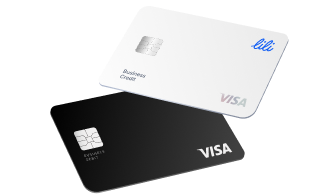
The best bank account for small business in Georgia depends on how your business operates. There is no single answer for every business type. For owners who want $0 monthly fees, high-yield savings, and built-in accounting and tax tools, Lili is the strongest digital-first pick. For frequent cash deposits and in-person service, Chase, Bank of America, and Truist have the deepest Georgia branch networks. For local relationship banking, Synovus (founded in Columbus, Georgia) and Delta Community Credit Union are solid choices. This guide compares all of them on the things that actually move money: fees, APY, branch access, cash handling, and the tools you use daily.
Georgia is consistently ranked among the top states in the US for business, and its small business base spans Atlanta tech and logistics, Savannah’s port economy, and Augusta’s healthcare and cyber sectors. That range is why there is no universal “best” account – a Savannah importer taking cash has different needs than an Atlanta SaaS startup paid entirely by ACH.
Best bank Accounts for small business in Georgia: quick comparison
| Bank | Best for | Monthly fee | GA branches | Cash deposits | Savings interest |
|---|---|---|---|---|---|
| Lili | Digital-first SMBs wanting $0 fees + finance tools | $0 (Core plan) | None (online) | Limited, via retail network (fees apply) | 2.25% APY up to $500K; 4.00% APY on $500K-$1M |
| Chase | In-person banking and cash-heavy businesses | Waivable with min. balance | 150+ | Yes, branch and ATM | Low base rate |
| Bank of America | Existing BofA customers, cash management | Waivable with min. balance | ~200 | Yes, branch and ATM | Low base rate, tiered via rewards |
| Truist | Branch access statewide | Waivable with min. balance | Wide statewide footprint | Yes, branch and ATM | Low base rate |
| Synovus | Georgia-based relationship banking | Waivable with min. balance | Strong regional presence | Yes, branch and ATM | Varies by account |
| Delta Community CU | Low fees, local member-owned option | Low to none | Atlanta-area branches | Yes, branch and ATM | Member-friendly rates |
Lili is a financial technology company, not a bank. Banking services are provided by Sunrise Banks, N.A., Member FDIC. Rates and features are current as of 2026 and can change – verify before opening.
Lili: best for digital-first Georgia businesses
Lili is an award-winning online business banking platform built for growth-ready small businesses, including Georgia business owners who run their operations online. Advanced business banking comes with built-in financial tools for accounting and taxes, so you’re not paying for branch overhead you never use. The free Core plan is designed for businesses managing real volume and complexity, from day one through higher-revenue, multi-employee stages.
What stands out:
- No monthly fee on the Core plan, no minimum balance, no overdraft fees, and no fees at MoneyPass ATMs.
- High-yield business savings: 2.25% APY on balances up to $500,000 and 4.00% APY on the portion from $500,000 to $1,000,000. Savings is now available on every plan, including free Core, with no lockups.
- FDIC insurance up to $3 million through Lili’s sweep network of program banks. The standard FDIC limit is $250,000 per depositor per bank; Lili reaches higher coverage by spreading deposits across partner banks via Sunrise Banks, N.A. This is meaningful for Georgia businesses holding payroll or contract reserves above the standard limit.
- Payments built for volume: Express ACH, expedited check deposits, and domestic and international wires (international wires for legal entities such as LLCs and corporations).
- Built-in finance tools: invoicing, expense tracking, tax prep, and reporting on paid plans, plus 50+ integrations with QuickBooks, Xero, Stripe, Shopify, Gusto, and Square.
- Team and accountant access, plus credit-building through BusinessBuild, flexible business financing, and seven-day live support.
Plans: Core ($0), Pro ($15/mo), Smart ($35/mo), and Premium ($55/mo). The paid tiers add tax savings buckets, advanced reporting, and accounting software.
Where Lili is more limited: cash deposits. There are no fee-free cash deposits and cash goes through a retail partner network with fees and limits. If your Georgia business takes meaningful cash – a Savannah retail shop, a cash-paid trade – a bank with branch and ATM deposits will serve you better. For service, online, ecommerce, and B2B businesses paid by ACH, card, or wire, that limitation rarely matters.
Chase: best for in-person banking and cash deposits
Chase has more than 150 branches across Georgia and one of the strongest digital platforms among national banks. Chase Business Complete Banking includes built-in card processing through QuickAccept, so retail and restaurant owners can take payments without a separate merchant account. New-customer checking bonuses are common. The trade-off is monthly fees that apply unless you keep a minimum balance, and small-business lending that can be less flexible than a community bank’s.
Bank of America: best for existing BofA customers
With roughly 200 Georgia branches, Bank of America is a natural fit if you already bank there personally. Its Preferred Rewards for Business program raises savings rates and waives fees as your relationship balances grow, and its cash management tools are strong for businesses moving money across accounts. Watch the fee schedule, which can be complex for newer owners, and transaction limits on entry-level accounts.
Truist: best for branch access across Georgia
Truist (the SunTrust successor) has a wide footprint across metro Atlanta and the rest of the state, making it a practical choice for businesses that want a banker they can sit down with. It offers treasury management, merchant services, fraud protection, and next-business-day funding. Like other big banks, fees are waivable with minimum balances.
Synovus: best for Georgia relationship banking
Founded in Columbus, Georgia, Synovus is one of the Southeast’s most established banks and leans into local decision-making and relationship lending. If you want a Georgia-rooted institution where loan decisions are made closer to home, Synovus is worth a conversation, especially for businesses planning to borrow.
Delta Community Credit Union: best low-fee local option
Delta Community is the largest credit union in Georgia, open to most state residents. As a member-owned institution, it typically offers lower fees and competitive rates, with a strong Atlanta-area presence. The trade-offs are membership requirements and fewer advanced digital tools than a national bank or a fintech platform.
Online vs traditional vs credit union: which fits your Georgia business?
Online platforms (Lili, and other fintechs) win on cost and tools. No branches means lower overhead, which translates to $0 or low monthly fees, higher savings yields, and software that connects to your accounting stack. Best for service providers, ecommerce, startups, and any business paid digitally.
Traditional national and regional banks (Chase, Bank of America, Truist, Synovus) win on cash handling, in-person service, and broad lending. Best for cash-heavy businesses and owners who value a local banker.
Credit unions (Delta Community) win on low fees and community focus. Best for owners who prioritize relationships and rate over digital depth.
Many Georgia businesses run a hybrid setup: a digital platform like Lili for everyday operations, savings, and bookkeeping, plus a traditional account for cash deposits or a specific lending relationship.
How to choose the best bank for your Georgia business
Here’s what to compare, starting with what affects your bottom line most:
- Fees. Look past “no monthly fee” headlines. Check wire fees, ACH fees, cash deposit fees, and out-of-network ATM fees. Georgia’s flat 4.99% state income tax (2026) means every dollar saved on banking stays in your pocket, since there are no city or county income taxes to layer on top.
- Cash handling. If you take cash, prioritize branch and ATM deposits. If you don’t, you can trade that away for lower fees and better tools.
- APY. Idle operating cash should earn. A high-yield savings account that pays 2.50% or more beats the near-zero rates on most traditional business savings.
- Tools and integrations. Invoicing, accounting, and tax features that sync with your account save hours every month.
- FDIC coverage. Confirm where deposits sit and how much is insured. Coverage above $250,000 requires a sweep or multi-bank structure.
- Lending and growth. If you expect to borrow, a relationship bank or a platform with capital partners matters.
What you need to open a business bank account in Georgia
Have these ready before you apply:
- Your IRS-issued EIN
- Formation documents filed with the Georgia Secretary of State (Articles of Organization or Incorporation)
- A government-issued photo ID for anyone with operating control and any owner holding 25% or more
- Your business license, if applicable
Online platforms like Lili let you open an account from your phone with no branch visit, often with near-instant approval for sole proprietors. National banks allow online opening too, while most credit unions still expect an in-person visit.
Common mistakes Georgia business owners make
- Choosing on brand familiarity instead of fit. Your personal bank is not automatically your best business bank.
- Ignoring savings yield. Leaving reserves in a 0.01% account costs real money; high-yield options are easy to set up.
- Picking a fee-free online account, then realizing you take cash. Map your payment mix first.
- Overlooking FDIC structure. Assuming every dollar is covered without checking the per-bank limit.
- Mixing personal and business funds. A dedicated business account protects your liability shield and simplifies taxes.
How Lili helps Georgia small businesses
For Georgia owners who do most of their banking online, Lili removes the usual trade-off between low cost and real capability. The free Core plan gives you a full business checking account with no monthly fee, expedited payments, and FDIC coverage up to $3 million through its sweep network – protection that used to require juggling multiple bank accounts. Your operating cash earns 2.50% APY up to $500,000 with no minimum and no lockups, and savings is included even on the free plan.
Lili pairs business banking with built-in financial tools for invoicing, expense tracking, and tax prep, so a growing Atlanta agency or a Macon ecommerce seller can close the books without exporting data between five tools. Team and accountant access, plus integrations with QuickBooks, Xero, Stripe, and Shopify, keep everything in sync as you scale. If your business runs on digital payments rather than cash, Lili covers the day-to-day and gives your reserves a place to grow.
FAQ
What is the best bank account for small business in Georgia?
It depends on how your business operates. Lili is the best fit for digital-first businesses wanting $0 fees and built-in finance tools; Chase, Bank of America, and Truist are best for cash deposits and in-person banking; Synovus and Delta Community Credit Union suit local relationship banking.
Can I open a business bank account in Georgia online?
Yes. Lili, Chase, Bank of America, and Capital One all allow online opening for Georgia businesses. Lili is fully online with no branch visit. Most credit unions, including Delta Community, still require an in-person visit.
What do I need to open a Georgia business bank account?
Your EIN, formation documents filed with the Georgia Secretary of State, a government-issued photo ID for anyone with control or 25%+ ownership, and a business license if your activity requires one.
Is a fintech account like Lili FDIC insured?
Yes. Lili is a financial technology company, not a bank, and banking services are provided by Sunrise Banks, N.A., Member FDIC. Deposits are insured up to $3 million through a sweep network of partner banks, above the standard $250,000 per-bank limit.
Which bank is best for a cash-heavy Georgia business?
A traditional bank with branch and ATM access, such as Chase, Bank of America, Truist, or Synovus. Online platforms like Lili are not built for frequent cash deposits.
Does Georgia tax affect where I should bank?
Indirectly. Georgia has a flat 4.99% state income tax in 2026 and no city or county income taxes, so minimizing banking fees has a direct, untaxed impact on what you keep. Lower fees and higher savings yield matter more here than in high-fee states.
What APY can a Georgia small business earn on savings?
With Lili, business savings earns 2.25% APY on balances up to $500,000 and 4.00% APY on the portion from $500,000 to $1,000,000, with no minimum balance. Most traditional Georgia banks pay far less on business savings.