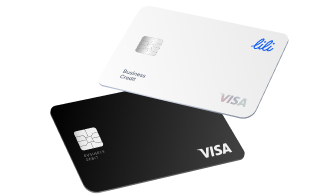
The best small business bank accounts in the U.S.include Lili for most small businesses, Mercury for startups, and Found for solopreneurs. Relay also made the list as the best choice for managing cash across multiple accounts, along with Bluevine for its checking APYs and Grasshopper for its hybrid financial rewards. Lastly, Chase was named the best option for cash-heavy businesses that need access to physical branches. Read on to learn more about each provider and how to find the best account for your small business.
The best small business bank accounts for 2026 at a glance
| Monthly Fee | APY | FDIC Coverage | Best For | |
| Lili | Checking: $0* Savings: $0 (included with checking) | Checking: No Savings: 2.25% on balances up to $500K, then 4.00% for balances from $500K up to $1M | Up to $3M | Most small businesses |
| Mercury | Checking: $0*Savings: $0 (included with checking) | Checking: No Savings: No | Up to $5M | Startups and digital-first companies |
| Bluevine | Checking: $0, $30, $95, fee waivers available Savings: NA | Checking: 1.3% on balances up to $250K with Standard; 1.75% on balances up to $250K with Plus; 3% APY on all balances with Premier, conditions apply Savings: NA | Up to $3M | Checking APYs |
| Relay | Checking: $0, $30, $120Savings: $0 (included with checking) | Checking: No Savings: 1.19% on Starter, 1.87% on Grow, 3.21% on Scale | Up to $3M | Multi-account cash management (Profit First) |
| Found | Checking: $0, $35, $80 Savings: No | Checking: None on Found base plan, 1.50% on balances up to $20K on Plus plan; 2.50% on all balances on Pro plan. Savings: NA | $250,000 standard limit | Solopreneurs who want built-in bookkeeping |
| Chase | Checking: $15, $40, $95, fee waivers available Savings: $10 to $20, waivers available | Checking: No Savings: Up to 0.02% | $250,000 standard limit | Cash-heavy businesses |
| Grasshopper | Checking: $0 Savings: $0 | Checking: 1% APY on balances up to $24,999, 1.35% APY on balances from $25K to $250K, 1% APY on balances above $250K Savings: 1.55% APY on balances up to $24,999. 3% APY on balances of $25,000 or more. | Up to $125M | Cashback plus interest |
*Higher tier pricing plans are available, but they don’t impact the core banking features.
The best small business bank accounts reviewed
Here’s a closer look at the seven best small business bank account providers of 2026.
1. Lili: Best for most small businesses
With more than 200,000 customers served, Lili’s well-rounded offering takes the 2026 spot for the best bank account for most small businesses. The fintech’s Core plan has no monthly service fee and includes a checking and savings account. Savings balances earn a competitive 2.25% APY on balances up to $500,000, and a 4.00% APY on balances from $500,001 to $1 million. Meanwhile, FDIC deposit insurance protects up to $3 million in deposits through Sunrise Banks N.A. and its program banks.
Once your account is open, Lili will send you a Visa debit card that allows you to make surcharge-free withdrawals at MoneyPass ATMs and purchases wherever Visa is accepted (without foreign transaction fees). If you have team members who need account access, you can request additional debit cards and set up permissions for each team member. Additionally, you can send and receive funds through competitively priced domestic wires, international wires in over 140 currencies, expedited check deposits, and Express ACH transfers. Meanwhile, over 50 business integrations allow you to connect software from companies like QuickBooks, Xero, Gusto, Stripe, and Shopify.
Lili also offers live customer service seven days per week and has a 4.7-star Trustpilot rating after more than 4,400 reviews. Previous customers say they appreciate the responsive support team, the user-friendly mobile app, and how Lili makes it easy to manage transactions at scale. Plus, Lili can grow with you. If you need more features and financial support, you can upgrade to unlock tools for building business credit, invoicing, bill pay, accounting, taxes, and more.
2. Mercury: Best for startups and digital-first companies
Mercury is a popular choice for startups and digital-first businesses. In fact, one in three startups reportedly choose it as their bank. The fintech offers a base plan with no monthly fee that includes a business checking account, a business savings account, free domestic and USD international wire transfers, and FDIC insurance up to $5 million through Choice Financial Group and Column N.A. and its program banks.
Mercury’s base plan also lets you pay global vendors in over 40 currencies for a 1% currency exchange fee, access invoicing and bill pay tools, and earn a Treasury APY over 3% once your Mercury balance hits $250,000. Further, you can access a variety of automations, contractor onboarding, and a full banking API.
On the downside, Mercury doesn’t support cash deposits or pay interest on its business bank accounts. It also doesn’t have an ATM network and charges a 3% foreign transaction fee on non-USD card transactions.
3. Bluevine: Best for interest on your checking balance
While Bluevine doesn’t offer savings accounts, it’s a great option if you want to earn a competitive APY on a standalone checking account.
Bluevine’s base Standard plan has no monthly fee and pays a 1.3% APY on balances up to $250,000. However, you only earn the APY if you meet one of the two eligibility requirements during a month’s eligibility period: spend at least $500 with a Bluevine debit or credit card, not including ATM withdrawals, or receive or deposit at least $2,500 in client payments.
Bluevine’s mid-tier Plus plan costs $30 per month and has an APY of 1.75% for balances up to $250,000. However, the company waives the $30 monthly fee if you maintain an average daily balance of at least $20,000 in your Bluevine checking account or spend at least $2,000 with your account debit card. The top-tier Premier plan costs $95 per month and pays a 3.0% APY on all balances. The $95 fee can be waived if you maintain an average daily balance of $100,000 or spend at least $5,000 with your Bluevine debit card.
Beyond the APYs, Bluevine provides up to $3 million in FDIC insurance through Coastal Community Bank and its program banks. The platform also offers in-house loans and credit lines, invoicing on all plans, and Treasury services once your balance reaches at least $50,000.
4. Relay: Best for multi-account cash flow
As the official banking platform for the Profit First method, Relay can be a good fit if your cash management method involves separating money into multiple accounts. The company offers three plan tiers, each with at least 20 checking accounts.
The base Starter plan has no monthly fee, 20 checking accounts, two savings accounts, and a 1.19% savings account APY. The mid-tier Grow plan costs $30 per month and includes 20 checking accounts, two savings accounts, and a 1.87% savings account APY. Lastly, the top-tier Scale plan costs $120 per month and includes 50 checking accounts, two savings accounts, and a 3.21% savings account APY.
Beyond these plan basics, Relay offers up to $3 million in FDIC insurance through Thread Bank and its program banks. It also provides surcharge-free withdrawals at Allpoint ATMs, team roles, and software for bills, invoicing, and expenses.
5. Found: Best for solopreneurs who want bookkeeping built in
Found is worth considering if you’re a solopreneur who wants banking with built-in bookkeeping. The company’s base plan has no monthly fee and includes a business checking account, along with extensive support for bookkeeping, taxes, invoicing, and even contractor management.
The free bookkeeping features include automatic expense categorization, write-off identification, receipt attachments, profit and loss reports, income and expense reports, balance sheets, and a chart of accounts. Plus, you can automate tax savings, request real-time tax estimates, track deductions, and generate certain tax forms.
On the banking front, Found offers $250,000 in FDIC insurance through Lead Bank. Each account also comes with 20 sub-accounts called pockets and 24/7 virtual assistance. However, APYs are only available on Found’s paid plans, and the company doesn’t have an ATM network.
6. Chase: Best for cash and branches
Chase is one of the largest traditional banks in the U.S., with more than 14,000 ATMs and 5,000 branches. As a result, it can be a great fit if you need to make regular cash deposits for your business or prefer in-person banking.
Chase offers three business checking account plans with waivable monthly service fees of $15, $40, and $95. The plans primarily differ in the number of fee-free debits and deposits you can make with a banker each month, the amount of cash you can deposit fee-free in a branch each month, and the requirements for waiving the service fee.
While branch access and cash deposit support are essential for some small business owners, they come with drawbacks. Chase only offers the standard $250,000 in FDIC insurance coverage, its APYs top out at a very low 0.02%, and it tends to charge higher fees across the board.
7. Grasshopper: Best for cashback plus interest
Grasshopper is worth considering if you want to maximize your earnings through both rewards and interest.
The bank offers an Innovator Checking Account with no monthly service fee, unlimited 1% cash back on qualifying debit card purchases, and an APY that ranges from 1% to 1.35%. The 1% APY applies to balances up to $25,000 and over $250,000, while the 1.35% APY applies to balances from $25,000 to $250,000. You can also open an Innovator Savings Account with no monthly service fee that earns a 3% APY on balances of $25,000 or more.
Another benefit of choosing Grasshopper is FDIC insurance up to $125 million through Grasshopper Bank, N.A., and its program banks. Most other bank account providers cap expanded FDIC coverage at $5 million or less. Grasshopper also offers surcharge-free withdrawals at MoneyPass and SUM ATMs, cash deposits at select MoneyPass ATMs, and support for international payments.
How to Choose the Best Small Business Bank Account
You may still be wondering which business bank account is best for you. As you review and compare options, here are the key factors to consider:
- Cost: Review each provider’s plan options, monthly fees, and fee schedule to gauge the overall cost and value. Note the cost of fees that will impact you most.
- FDIC coverage: Ensure the account is FDIC insured, and check if expanded coverage is available through a sweep network. Estimate the amount of money you’ll hold in the account and look for a provider that offers at least that amount of coverage.
- Cash management: If you want to deposit and withdraw cash from your business bank account, check each provider’s ATM network, fees, and limits, along with their cash deposit locations, limits, and fees.
- Team controls: If you want employees or other team members to have limited access to the account, look for features such as role-based permissions, spending limits, employee debit cards, approval requirements, and the ability to restrict access to certain accounts or transactions.
- APY: The APY determines how much you can earn from your account balance(s). Check a provider’s APY offerings, including any qualifiers that must be met and which accounts the APYs apply to.
- International support: If you’re operating a U.S. business from abroad, or planning to do business internationally, check if a provider allows remote account openings to non-resident founders in your country. Additionally, look for competitive pricing on international wire transfers and debit cards with no foreign transaction fees.
- Tools: Many bank account providers offer tools to streamline financial operations. Review the tools that come with a provider’s plans, such as software for bookkeeping, taxes, invoicing, bill pay, and contractor management. If you’re currently paying for those tools elsewhere, factor in the cost savings of getting them with your banking plan.
- Customer support: Check the customer service a bank account provider offers, including the available support channels, service hours, response times, and reviews from past customers on sites like Trustpilot.
The “Up To” APY Trap
When shopping for a bank account, you’ll often see providers mention APYs up to a certain amount. While the headline APY may be appealing, you don’t want to assume you’ll automatically get it when you open an account. Providers often offer various APYs with differing conditions, such as minimum balance requirements. For example, Lili offers a savings APY up to 4.00%. However, you’ll earn a 2.25% APY on balances up to $500,000, then 4.00% on balances from $500,001 to $1 million.
Providers may also reserve their highest APYs for their highest-paid account tiers. For example, Bluevine offers APYs up to 3% on its checking accounts. But the 3% APY is only available to members of the Premier plan, which costs $95 per month. The base Standard plan with no monthly fee pays an APY of just 1.3% on balances up to $250,000. It’s also important to figure out which accounts offer which APYs. Providers may offer APYs on their checking accounts, savings accounts, or both.
Digital Platforms Vs. Traditional Banks vs. Credit Unions
You can find business bank accounts from several different types of institutions, including digital platforms, traditional banks, and credit unions.
Digital platforms
Fintech companies often partner with FDIC-member banks to provide banking services through digital platforms. These platforms typically offer competitive costs, quick onboarding, expanded FDIC coverage, competitive APYs, and innovative financial tools. They don’t typically have physical branches, which can limit their ability to support cash transactions. However, many fintechs use ATM and cash deposit networks to bridge the gap.
Traditional banks
Traditional banks are established financial institutions that operate through a network of physical brick-and-mortar locations and online properties. They generally have much higher overhead costs than digital platforms, which often leads to lower APYs and higher fees. However, they can provide the in-person customer service and cash management that digital platforms often can’t.
Credit unions
Credit unions are non-profit, member-owned financial cooperatives that offer banking services and loans. They often have both physical branches and online services, so can provide in-person customer service and support for cash deposits like traditional banks. However, unlike traditional banks, they generally offer lower costs and higher APYs.
The Best Account by Business Type
No single business bank account is best for every small business. Providers differ in pricing, features, account structure, and benefits, so some are better suited to certain types of businesses than others. For example, based on the above company information, here are the banks we generally recommend for each of the following business types:
- Solo freelancers: Found
- Small teams: Lili
- Fast-growing teams: Mercury
- Venture-backed startups: Mercury
- Cash-heavy local businesses: Chase
- Foreign-owned companies: Lili
- Profit-First followers: Relay
- High idle cash balances: Grasshopper
Common Mistakes to Avoid
Before we wrap up, here are five common mistakes business owners make when choosing a business bank account—and how to avoid them:
- Choosing an account for a sign-up bonus: Sign-up bonuses can provide value, but they’re a one-time promotion. Be sure to consider any bonus in the context of an account’s overall run cost and value to ensure a bank account makes sense for your business long-term.
- Assuming you’ll receive a headline APY: Headline APYs are the highest APY a provider offers. In many cases, you must satisfy certain requirements to earn them, such as maintaining a certain minimum balance or joining the highest-tier paid plan. Ensure your account balance or plan will qualify you for the APY you want.
- Choosing a provider with insufficient FDIC limits: If your business plans to hold more than $250,000 across deposit accounts at a single bank, you need a provider that offers sufficient FDIC coverage through a sweep network. Without adequate coverage, you risk losing funds if your bank fails.
- Paying twice for the same tools: Many bank account providers include various financial tools in their plans, such as bookkeeping and invoicing. If your banking plan replaces a tool you’re paying for elsewhere, cancel the other subscriptions so you’re not paying for it twice.
- Choosing a cash-free fintech for a cash business: Fintechs offer many appealing benefits, from low fees to high APYs. However, cash management is often not their strong suit. If you need to deposit or withdraw cash regularly, ensure the bank account you’re considering supports both.
How Lili Helps
Lili’s Core plan is a banking solution tailored to modern-day small business owners. You can quickly open an account online without worrying about a monthly fee, and will start earning at least 2.25% APY on your savings balance right out of the gate. Lili also facilitates surcharge-free access to MoneyPass ATMs and cash deposits at over 90,000 retail locations, along with up to $3 million in FDIC insurance per depositor. Plus, the platform goes far beyond banking. If you want to consolidate accounting, invoicing, bill pay, business credit, taxes, and banking in one dashboard, Lili’s higher-tier plans have you covered.
Get started with Lili today!
FAQ
Read on for answers to common questions about choosing a small business bank account.
What is the best small business bank account in the US for 2026?
Lili offers a solid all-around business bank account with no monthly fee, up to $3 million in FDIC insurance, competitive APYs, low fees, and highly-rated customer service. However, the best account for your business will depend on your specific needs. For example, you may prefer Relay if you follow the Profit First method or Grasshopper if you want more than $5 million in FDIC coverage.
Which small business bank accounts have no monthly fee?
Many companies offer small business bank accounts with no monthly fee, including Lili, Mercury, Bluevine, Relay, Found, and Grasshopper. However, many of these providers also offer higher-tier paid plans with additional features and benefits.
What is the best bank for a small business LLC?
The best bank account for a small business registered as an LLC depends on the business’s needs. Consider factors such as monthly fees, APYs, access to branches, ATMs, tools, employee access, and FDIC insurance coverage. The right account should offer the features your LLC needs at a competitive price.
How is my money protected above $250,000?
Non-bank companies often partner with FDIC-member banks to provide customers with banking services. In some cases, those banks expand the standard FDIC coverage limit by sweeping deposits across a network of FDIC-member banks. This allows you to qualify for up to $250,000 in FDIC insurance per ownership category at each bank in the network, while managing your account through your primary provider.
Do small business bank accounts earn interest?
Many small business bank accounts earn interest, but the APYs vary by provider and account type. If earning interest is a priority for you, look for accounts with a competitive APY and note any requirements you must meet to earn it. For example, Lili pays 2.25% on balances up to $500,000 and 4.00% on balances of $500,001 to $1 million.
Can a non-resident open a U.S. small business bank account?
Yes, non-U.S. residents who own U.S.-registered businesses can open a U.S. small business bank account with some providers. However, many companies that allow foreign founders limit eligibility to founders from a set list of countries. You’ll need to check the policies of the providers you’re considering.
Should I use a business or personal account for my company?
A business bank account is generally the better choice for company finances. Business accounts tend to offer features designed for companies, such as employee debit cards, invoicing tools, and higher transaction limits. Keeping the account dedicated to your business can also simplify bookkeeping and tax preparation while preserving the legal separation between you and your business.