Business bank accounts are far from one-size-fits-all. If you own a small business in Texas, the best account for you depends on several factors, such as your revenue collection method, business model, and monthly financial activity. For example, cash-heavy brick-and-mortar businesses often benefit more from traditional banks like Frost Bank. At the same time, digital-first businesses tend to benefit more from online financial platforms like Lili. In this article, we’re going to take a closer look at both bank account types and share seven of the best options for small businesses in the Lone Star State.
Best Bank Account for Small Business in Texas at a Glance
| Bank | Best For | Fee | Branch Access | Standout Feature |
|---|---|---|---|---|
| Lili | TX service providers, digital-first small businesses | $0-$55 | None (online)-only | Up to 4.00% Annual Percentage Yield on savings |
| Chase | Statewide branch + card ecosystem | $15-$95 | 5,000 nationwide | Largest branch network |
Frost Bank | TX-based relationship banking | $8-$30 | 200 in Texas (San Antonio HQ, statewide) | #1 in customer satisfaction for 17 years |
| Bank of America | Cash flow tools + branch access | $16-$29.95 | 3,500 nationwide | Number one business lender in the U.S. |
| Texas Capital Bank | Mid-sized TX businesses | $12 | 10 across Texas | Unlimited transactions at a traditional bank |
| Woodforest National Bank | Cash-heavy businesses | $12-$20 | 730, East Coast to Texas | 5 checking account options |
| Amegy | Houston-based small businesses | $8 to $50 | 20 around Houston area | Includes invoicing software |
Lili is a financial technology company, not a bank. Banking services are provided by Sunrise Banks, N.A., Member FDIC. Rates and features are current as of 2026 and can change – verify before opening.
Traditional Banks vs. Fintech Platforms: Which Is Better For You?
When choosing a bank account for your small business in Texas, it’s important to understand the difference between traditional banks and fintech platforms.
Traditional Banks
Traditional banks are financial institutions that provide banking services through networks of brick-and-mortar locations and, often, digital channels. Physical branches allow them to provide in-person customer support and manage large volumes of cash. However, maintaining those locations is costly, which often means higher fees for customers. Still, traditional banks can be preferable for cash-heavy businesses, such as retail stores, restaurants, and contractors, along with founders who prefer the option to visit a branch in person.
Fintech Platforms
Financial technology companies, also known as fintechs, partner with FDIC-insured institutions to offer banking services through online platforms. Without physical branches, these companies generally have much lower operating costs, which often means lower fees for customers. They also tend to offer more digital financial tools with their banking services, such as accounting software and various integrations. Opting for a fintech can be better for small businesses, such as ecommerce, consultants, and service providers, because it often means lower costs and more advanced digital integration.
Lili — Best for Texas Service Providers and Digital-First Small Businesses
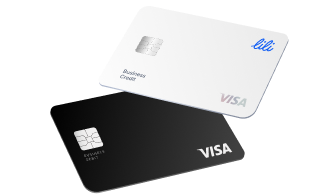
If your small business primarily operates online and is comfortable with virtual support, Lili is a great option to consider. The Lili Core plan has no monthly fee and includes advanced business banking services provided by Sunrise Banks, N.A. (Member FDIC), including:
- A checking account
- A savings account with an APY of up to 4%
- FDIC insurance up to $3M via a sweep network program
- Domestic wires with flat, competitive fees
- International wires in over 140 currencies
- Expedited check deposits
Lili Core members also receive various other benefits, such as access to business credit opportunities, support for over 50 business integrations, and flexible payment options, including international wire transfers in over 140 currencies.
For those who want to go beyond banking, Lili offers the following paid plans:
- Lili Pro ($15/mo): Includes Lili Core plus you can organize expenses by tax category, attach receipts to expenses, generate expense reports, and automate tax savings.
- Lili Smart ($35/mo): Includes Lili Pro plus predictive AI-powered transaction categorization, enhanced reporting, invoice management, bill management, and external account syncing.
- Lili Premium ($55/mo): Includes Lili Smart plus premier priority service.
Lili helps small businesses bank affordably and streamline a variety of common financial operations. That said, the fintech may not be the best if you prefer in-person support or have a cash-heavy business. While human customer support is available seven days per week, it’s by phone, email, or in-app chat. Additionally, cash deposits and withdrawals are supported, but only in limited amounts. For example, Green Dot retail locations generally limit deposits to $500 per transaction.
Fast payments, up to 4.00% Annual Percentage Yield (APY), and up to $3M in FDIC insurance
Best Branch-Based Banks for Cash-Heavy Texas Businesses
Frost Bank
Checking account plans: $14, $30, $60+
Areas served: Texas
Branches: 200
Business offerings: Business checking and savings accounts, investments, insurance, loans, and merchant services
Frost Bank is a Texas-based bank that’s ranked #1 in J.D. Power’s Texas consumer banking customer satisfaction survey for 17 consecutive years. Its two lower-cost business checking accounts include a savings account, a debit card, and conditional monthly service fee waivers. They primarily differ in their non-electronic transaction limits, cash processing limits, and account fees. Frost also offers a third business checking account with treasury management services, starting at $60 per month, for larger businesses.
Chase
Checking account plans: $15, $40, $95
Areas served: U.S.
Branches: 5,000
Business offerings: Business checking and savings accounts, small business loans, business credit scores, invoicing, bill pay, and retirement plans.
Chase offers three business checking account plans with monthly service fees from $15 to $95. All of the plans include a debit card, a savings account, and conditional fee waivers. However, they have different wire transfer fees, cash deposit limits, and included account debits. Chase also offers bonus cash if you open an account and then complete certain qualifying activities.
Bank of America
Checking account plans: $16, $29.95
Areas served: U.S.
Branches: 3,500
Business offerings: Business checking accounts, savings accounts, Treasury services, financing, merchant services, workplace benefits, and business credit scores.
Bank of America offers two business checking account plans. The base account comes with a debit card, Zelle access, a QuickBooks integration, a conditional fee waiver, and no monthly fee for 12 months. The higher tier adds a second Relationship Banking account, a business savings account, and various fee waivers. Additionally, both accounts have different transaction and cash deposit limits. It’s also worth noting that Bank of America is the number one business lender in the U.S., which may be appealing if you’re looking for business financing.
Texas Capital Bank
Checking account plans: $12, $12
Areas served: Texas
Branches: 10
Business offerings: Checking accounts, savings accounts, money market accounts, merchant services, and loans.
Texas Capital Bank offers two $12 per month checking accounts that include unlimited debit card transactions, unlimited ATM withdrawals, and no minimum deposit requirement. The main differences between the two are a difference in service charge waiver criteria, and one offers a 0.25% APY on balances.
Woodforest National Bank
Checking account plans: $12, $15, $15, $20, $20
Areas served: 17 states, primarily East Coast but as far West as Texas
Branches: 730
Business offerings: Checking accounts, savings accounts, loans, investments, insurance, and merchant services.
Woodforest National Bank offers five business checking account plans that range from $12 to $20 per month. However, waivers and credits can offset many of the monthly service fees. The main differences between the account tiers are the service charge waiver criteria and the number of included monthly transactions.
Amegy Bank
Checking account plans: $8, $15, $15, $50
Areas served: Houston and the surrounding areas
Branches: 20
Business offerings: Checking accounts, savings accounts, financing, and Treasury management.
Amegy Bank offers four business checking accounts with invoicing software, Zelle, and billpay support. Each has waivable monthly service fees that range from $8 to $50. However, the tiers vary when it comes to included monthly transactions, monthly cash deposit limits, additional free accounts, and various other account fees.
Texas-Specific Considerations That Affect Your Banking Setup
Texas doesn’t levy a personal or corporate income tax, which can make it an appealing place to start a business. However, the state does impose a franchise tax on many business entity types once their margins exceed the set annual limit—$2.65 million for 2026 and 2027. The current franchise tax rate is 0.375% for retail or wholesale businesses, and 0.75% for all other businesses. Texas also imposes a 6.25% sales and use tax on all retail sales, leases, and rentals of most goods and taxable services. This is in addition to a local sales and use tax of up to 2%.
When choosing a small business bank account, it’s important to understand your tax liabilities and ensure your account will offer the tax support you need. For example, Lili’s paid plans offer the ability to automatically set aside a custom or suggested percentage of incoming revenue, so you can prepare for upcoming tax bills. Many traditional banks also offer merchant accounts that process customer tax collections, store the funds in segregated accounts, and enable electronic tax payments to state revenue departments.
How to Choose the Right Bank Account for Your Texas Business
Not sure where to start? As you review and compare small business bank accounts, here are eight key questions to ask yourself:
- Do you need to make regular cash deposits? If yes, a traditional bank is likely going to be best. Review checking account plans from various banks, paying careful attention to cash deposit limits and fees.
- Do you need or prefer in-person support? If yes, look for a bank with highly-rated customer service and branches near you.
- What types of transactions do you perform each month, and in what volume? Many bank account providers cap the number of transactions you can perform per month. Look for an account that suits your needs with as few fees as possible.
- Which bank account offers the best value for the services you need? Fees vary by bank and bank account. Identify the banking services you’ll use most and compare the fee schedules to see which will offer the most value overall.
- Do you want to earn interest on the money in your business bank accounts? Compare APY offerings to find the best deal. For example, Lili offers an APY of up to 4% on its savings account.
- What integrations do you want to use with your bank? Identify the integrations you need, and which bank accounts support them.
- Do you need support for your business taxes? Assess your tax liability and whether you need specific services to help you manage it, such as automated transfers to tax savings accounts or merchant services.
- What additional tools and services would you like your bank account provider to offer? Consider the other financial services your business needs, such as accounting software, tax support, financing, and business credit support. Look for a provider that offers everything at a competitive value.
Common Mistakes Texas Business Owners Make When Choosing a Bank
Along with knowing what questions to ask yourself, here are a few common mistakes to avoid:
- Choosing an online bank account as a cash-heavy business: Choosing a bank that doesn’t support cash deposits or withdrawals, or makes them difficult through low limits and high fees, can be a costly mistake when you run a cash-heavy business.
- Overlooking transaction and deposit limits: Choosing a bank account with transaction and deposit limits that don’t match your typical activity can lead to unnecessary costs.
- Getting blinded by introductory perks: Introductory offers can be enticing. However, the standard account fees and terms are what matter long-term. Be sure that accounts are suitable for both the short- and long-term.
- Ignoring integrations: Integrations can help facilitate smooth, interconnected operations. Before choosing an account, review the software programs you use, and see which providers support integrations with them.
- Skipping the fine print: Not reading the fine print on fees, promotions, monthly service charge waivers, and APYs can be costly.
- Assuming Texas has no business tax obligations: Texas doesn’t levy a personal or corporate tax, but it does have other taxes. Be sure to assess your tax liabilities and the banking services you need to stay compliant.
How Lili Helps
Lili can be a great fit for Texas-based small businesses that primarily operate online or any service-based business. Unlike many traditional banks, Lili’s base banking plan has no monthly service charge, despite being a competitive offering. That means you can enjoy all the benefits without worrying about meeting service charge waiver requirements each month. Lili also stands out because its paid tiers gradually unlock a lineup of accounting and tax tools, along with premier priority customer service. Overall, the platform can help you bank and streamline financial operations, all from one user-friendly online dashboard.
FAQ
Find quick answers to common questions about finding a business bank account in Texas.
What is the best bank account for a small business in Texas?
The best business bank account for a small business in Texas depends on factors, such as whether you operate online or through a brick-and-mortar location. Fintechs like Lili are a great option for digital-first small businesses, while cash-heavy brick-and-mortar businesses will likely find traditional banks better.
Is Frost Bank better than Chase for a small business in Texas?
Frost Bank has a strong local presence, highly rated customer service, and competitive offerings, which can make it a better fit for some Texas small businesses. However, Chase’s much larger nationwide branch network may be a better fit for businesses that operate across multiple states.
Do I need a Texas-based bank if my business operates online?
A Texas-based bank isn’t required for an online business. You can choose any bank account provider that serves businesses in Texas, including Texas-based community banks, national banks, and fintechs. The best choice depends on various factors, such as costs, branch access, cash-handling capabilities, and digital tools.
Does Texas have a business income tax?
Texas doesn’t levy a corporate or personal income tax. However, the state does impose a franchise tax on eligible entities when their revenue exceeds the applicable annual limit.
What is the Texas franchise tax and who has to pay it?
The Texas franchise tax is a tax levied on the taxable margin of many entity types in Texas, including corporations, LLCs, partnerships, and trusts. In 2026 and 2027, qualifying entities with a taxable margin of over $2.65 million are subject to the tax. The tax itself is 0.375% for retail and wholesale businesses and 0.75% for all other entities.
Can freelancers in Texas use an online-only bank?
Yes, freelancers in Texas can open an account with an online-only bank. Doing so can be advantageous because banks without branches tend to have lower fees, fewer transaction limits, and more financial tools.
How much FDIC insurance do Texas small business accounts get?
Standard FDIC limits are $250,000 per depositor, per insured bank, per ownership category. However, many banks use sweep networks to offer higher limits.