While many Americans are well-versed in personal credit, business credit is often less understood. If you’re new to it, you may wonder how it works, where to start, and if your business even qualifies. The good news is that most LLCs and corporations are eligible, and there are now tools that can help with everything from establishing tradelines to monitoring business credit reports. But which is best for your situation? After evaluating the leading credit-building tools for small businesses, here are our top nine picks for 2026.
The Best Tools to Build Business Credit in 2026
All of the following tools can help you build business credit, potentially opening doors to more financing opportunities. However, each has its own features and cost structure. Read on to learn the key differences between our nine top picks and when each can be best.
1. Lili — Best for business banking and credit building
Cost: BusinessBuild Program (add-on to any business banking plan) $18/mo (for the first 3 months, then $30/mo).
Built-in reporting tradelines: 2
Access to credit: Yes
Business credit report tracking: Yes
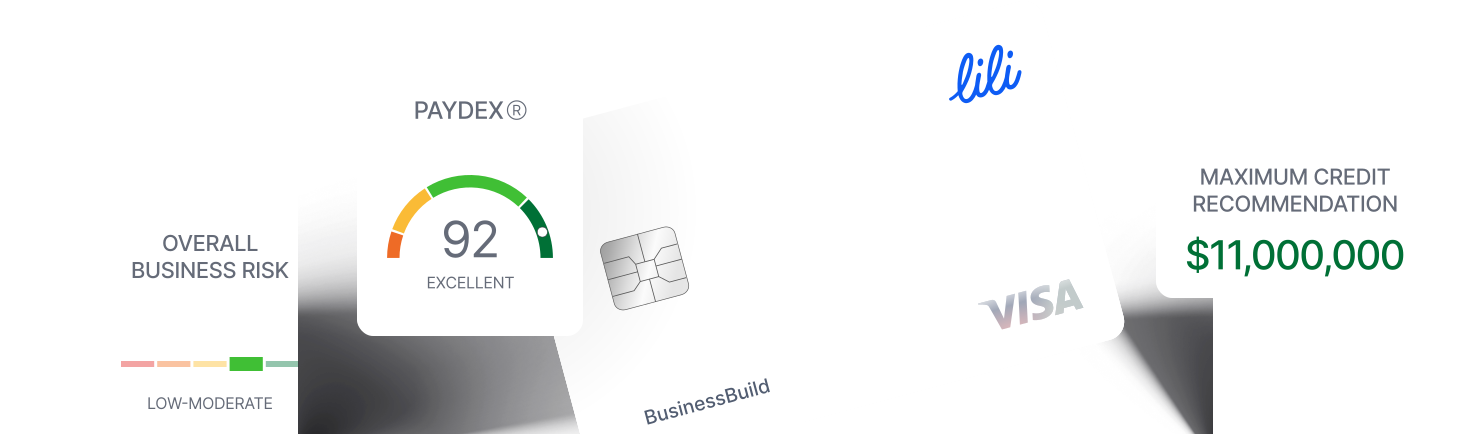
Lili is a great option if you’re looking for both a business banking solution and help building your business credit. Once you have a base plan, you can add the BusinessBuild Program and start with a 30 day free trial. Created in collaboration with Dun & Bradstreet, the add-on includes two built-in tradelines that report to Dun & Bradstreet— a secured business credit card (charge card) and the monthly payment for the BusinessBuild program. Additionally, you get 24/7 credit profile tracking, six key credit scores and ratings, real-time credit alerts, and credit-building training.
2. Nav — Best for building both business and personal credit
Cost: $0-$74.99/mo.
Built-in reporting tradelines: 1
Access to credit: Yes
Business credit report tracking: Yes
Nav focuses on helping both individuals and businesses build credit and access funding. The platform does so through four Nav Prime plans, which range from free to $74.99 per month.
The free plan helps you understand how to prepare your business for funding. Additionally, it provides your Experian personal credit score, cash flow tracking, a basic business credit range, and high-level data from the major bureaus.
From there, you can upgrade to a paid plan to access your business credit reports and scores, along with credit alerts, personal credit scores from two bureaus, a tradeline, bookkeeping tools, and monthly coaching.
3. eCredable — Best for turning existing bills into tradelines
Cost: $19.95-$39.95/mo.
Built-in reporting tradelines: 0
Access to credit: No
Business credit report tracking: No
eCredable can help you build business credit without opening new accounts. The platform allows you to report up to 24 months of payment history from existing business accounts, such as business credit cards, utilities, rent, and vendor accounts, to one or more of the major business credit bureaus.
All of eCredable’s reporting features are included in the base plan for $19.95 per month. From there, you can upgrade to Business Lift+ for $39.95 per month for extra perks, such as loan-readiness tracking, competitive benchmarking, and key financial metrics.
4. Dun & Bradstreet — Best direct-to-bureau option
Cost: $0-$149/mo.
Built-in reporting tradelines: 0
Access to credit: No
Business credit report tracking: Yes
Dun & Bradstreet offers direct access to your business scores and ratings through its Credit Insights plans. The free plan includes four D&B scores and ratings, along with a summary of your legal events and business operations, basic company information, and financial ratios.
The mid-tier plan is $49 per month and includes 24/7 access to six D&B scores and ratings, along with detailed information on legal events, payment history, inquiries, and more. Lastly, for $149 per month, you can add dark web monitoring, insights on up to five chosen companies, and the ability to add accounts through documentation uploads.
5. Brex — Best corporate card for building credit with all three credit bureaus
Cost: $0-$12/mo. per user
Built-in reporting tradelines: 1
Access to credit: Yes
Business credit report tracking: No
Brex is a financial technology platform that offers corporate credit cards, cash management accounts, and financial tools for businesses. The company’s Essentials plan has no monthly fee and includes unlimited global cards with rewards, along with other features such as banking, expense management, and automated bill pay. Alternatively, you can upgrade to the Premium plan for $12 per month, per user, to access additional features, integrations, security, and access.
A big perk with Brex’s corporate cards is that your payment history is reported to all three of the main business credit bureaus—Experian, Dun & Bradstreet, and Equifax. As a result, making on-time payments will help you build business credit history across all three credit bureaus. Additionally, Brex doesn’t require a personal guarantee from business owners.
6. Ramp — Best corporate card for spend and expense management
Cost: $0-$15/mo. per user
Built-in reporting tradelines: 1
Access to credit: Yes
Business credit report tracking: No
Ramp is another provider of a digital financial platform for businesses. The company’s free plan includes unlimited corporate cards and various other features, such as expense management, accounts payable, Treasury, and basic accounting automation. You can also opt for the Plus plan, which costs $15 per month, per user, for more advanced features in each category.
Ramp’s corporate cards help you build business credit with Dun & Bradstreet and earn cash back, without a personal guarantee. Additionally, they allow you to set limits for categories and specific vendors, while requiring approvals for anything out of policy. Expense management is also built in so all card transactions are categorized in real time and matched to receipts.
7. CreditSuite — Best guided program for total beginners
Cost: $497 for seven months or $2,997 one-time
Built-in reporting tradelines: No
Access to credit: Yes
Business credit report tracking: Yes
CreditSuite offers a real-time capital intelligence platform, The Lendavo System, which is designed to help businesses gauge their business health, build business credit, and access funding. For a one-time payment of $2,997, or seven monthly payments of $497, you can gain full access to the platform.
The key features include a business health dashboard, four business credit scores and reports, and two consumer credit scores and reports. Additionally, you’ll receive funding readiness scores and access to funding opportunities. While on the more expensive side, CreditSuite can be a good fit for total beginners who want a structured end-to-end program that connects you with lenders.
8. BILL (formerly Bill.com) — Best for large credit lines based on annual revenue
Cost: $0/mo.
Built-in reporting tradelines: 1
Access to credit: Yes
Business credit report tracking: No
BILL is a financial operations platform that streamlines accounts payable and receivable for businesses. However, it also offers a free Spend and Expense plan that includes corporate cards, budgeting and expense management tools, and access to credit lines of up to $5 million.
BILL’s credit lines are extended via the BILL Divvy Card and reported to the Small Business Financial Exchange (SBFE), which shares data with participating commercial lenders and business credit bureaus. Eligibility for credit is based on multiple factors, including annual business revenue, business history, cash balances, and business credit scores.
9. Net-30 vendor accounts — Best for companies with recurring supply purchases
Cost: $0
Built-in reporting tradelines: 1
Access to credit: Yes
Business credit report tracking: No
Net-30 vendors are suppliers that allow qualifying business customers to delay payment for goods or services for up to 30 days, without interest. For example, Uline, Quill, Grainger, and Crown Office Supplies are well-known companies that offer this payment option to qualifying customers.
Net-30 vendor accounts can offer an easy way to start building business credit because the eligibility requirements tend to be relatively lenient. However, always check on the reporting practices of a net-30 vendor you’re considering, as not all will report positive payment activity to the business credit bureaus.
How we evaluated every tool on this list
The credit-building tools on this list were primarily evaluated based on a variety of factors, including:
- Credit-building offerings: The products and services each company offers to help business owners establish, strengthen, and monitor business credit.
- Cost: The cost of the offerings, including base plan subscriptions, add-on plans, and any additional fees.
- Additional offerings: Other financial products or services available alongside the credit-building offerings that add value.
- Personal guarantee requirements: Whether business owners are required to provide a personal guarantee to get approved for a company’s credit-building products.
- Ease of use: The overall user experience of the tools, including onboarding, navigation, and outcomes.
We also compared all the tools side by side to identify their key differences, strengths, and ideal use cases.
How to sequence your first 90 days
If you’re looking to start building business credit now, here are the steps to complete in the next 90 days.
Day 1 to 14: The first step is to ensure your business is prepared to build business credit. You’ll need to register your business at the state level as an LLC or corporation. Once that is done, obtain a federal tax ID number, request a D-U-N-S number, and open a dedicated business bank account.
Day 14 to 30: The next step is to research tradeline options, which are accounts with companies that report payment activity to one or more of the three main business credit bureaus. You can find tradelines in several forms, such as membership plans to business platforms (like Lili), business credit cards, business loans, and net-30 vendor accounts.
Day 30 to 60: Open good-fit tradelines and ensure you make all of your payments on time. Tradeline providers generally compile customer data monthly and send it to one or more of the business credit bureaus. The bureaus then process the data and update business credit profiles accordingly.
Day 60 to 90+: Tradelines can take anywhere from one to three months to appear on credit reports, while business credit bureaus can require six months or more to generate credit scores. Continue to make timely payments and track your progress by monitoring your business credit reports. Also, consider enrolling in credit alerts.
Mistakes that silently kill your business credit score
As you work towards building business credit, try to avoid these common mistakes that can derail your progress:
- Opening accounts that don’t get reported: Not all business accounts get reported to the business credit bureaus. Ensure that the provider of any account you open reports to at least one of the major bureaus: Equifax, Experian, or Dun & Bradstreet.
- Making late payments: Ensure you make all your payments by the payment due dates. Some companies offer grace periods, but you don’t want to risk late payment reports that hurt your credit.
- Missing payments: You also don’t want to miss any payments. Missed payments will appear on your business credit reports and bring down your credit scores. Consider enrolling in automatic payments or scheduling payment reminders.
- Not tracking your credit reports: By monitoring your business credit reports and scores, you can ensure tradelines are being reported accurately. If you don’t, you won’t know if your efforts are paying off and won’t catch mistakes that could hold back progress.
- Closing tradelines: Closing tradelines will work against your goal of building business credit. You need to demonstrate that you can reliably manage accounts over extended periods. When possible, keep your tradelines open long-term.
FAQ about building business credit
Find quick answers to common questions about building business credit.
Can I build business credit without a personal guarantee or using my SSN?
Yes, you can build business credit without relying on your personal credit. While some tradeline providers require personal credit checks and personal guarantees, others don’t. For example, Lili offers two tradelines to business customers with EINs, and neither requires a personal credit check or a personal guarantee. Additionally, most vendors that offer standard net-30 accounts don’t check personal credit.
What do I actually need to start — an EIN, a D-U-N-S number, or both?
While both are recommended, only an EIN is required by most tradeline providers. Fewer require D-U-N-S numbers, but they are necessary to receive net-30 payment terms from certain major corporations. The main benefit of getting a D-U-N-S number is that it establishes a business credit file for your company with Dun & Bradstreet, which helps to streamline the credit-building process. You can get both straight from the Lili platform, saving you time navigating outside application systems.
How long does it take to build business credit using these tools?
New tradelines can appear on your business credit reports within 30 to 90 days, while credit scores can take six months or more. Each bureau has its own process and timeline. However, building business credit is an ongoing, long-term activity. The longer you maintain accounts and make on-time payments, the stronger your profile will become.
How do net-30 vendor accounts report to business credit bureaus?
When a net-30 vendor reports to a business credit bureau, it sends the payment data from a net-30 account as a commercial tradeline. The data is often sent once per month or once per billing cycle.
Do I need a business bank account to build business credit?
Yes, many tradeline providers require you to have a dedicated business bank account that matches your legal business name. The account is also necessary to preserve the liability shield LLCs and corporations provide.