The key fees to understand when choosing a business bank account.
When shopping for a business bank account, one of the most important factors to consider is the cost. Fees can vary greatly from one account to the next—not only in terms of the fee amounts but also in the types of fees banks charge. If you’re not careful, you could end up with an account that unnecessarily chips away at your margins. To help you find a fit that serves your needs and budget, here’s a breakdown of common business banking fees you should know.
Common business bank account fees
Business bank account fees vary significantly from one bank to another, and can even differ between accounts offered by the same bank. However, many do include the following fee types.
Monthly service fee
A monthly service fee is a recurring charge that a bank account provider charges the customer each month. When banks charge this fee, it’s often conditional, meaning it can be waived if certain deposit or purchase conditions are met. For example, you may have to pay a $15 monthly fee for an account if you don’t keep your balance above $500 or make $500 in debit card purchases per month. While these fees typically range from $0 to $20 per month for basic accounts, they can increase to $20 to $40 for mid-tier accounts, and up to $100 or more for high-tier accounts.
Transaction fees
Transaction fees are fees that apply whenever a customer completes a qualifying transaction. Banks that charge these often include a set number of free transactions each month, after which a per-transaction fee applies. For example, a bank may include 150 transactions per month at no cost and then charge $0.50 per transaction. The transaction types that are typically included in these fees are deposits, checks paid and deposited, and ACH credits and debits. Debit card transactions are often excluded.
Domestic wire fee
Domestic wires allow businesses to transfer funds directly to and from recipients at other U.S. banks, typically within one to two days. They’re generally faster than standard ACH transfers but come with higher costs. Banks often charge a fee of around $25 to $40 for outgoing wires and $0 to $15 for incoming wires. In some cases, accounts will include a limited number of free wires each month, after which a per-transfer fee applies.
International wire fee
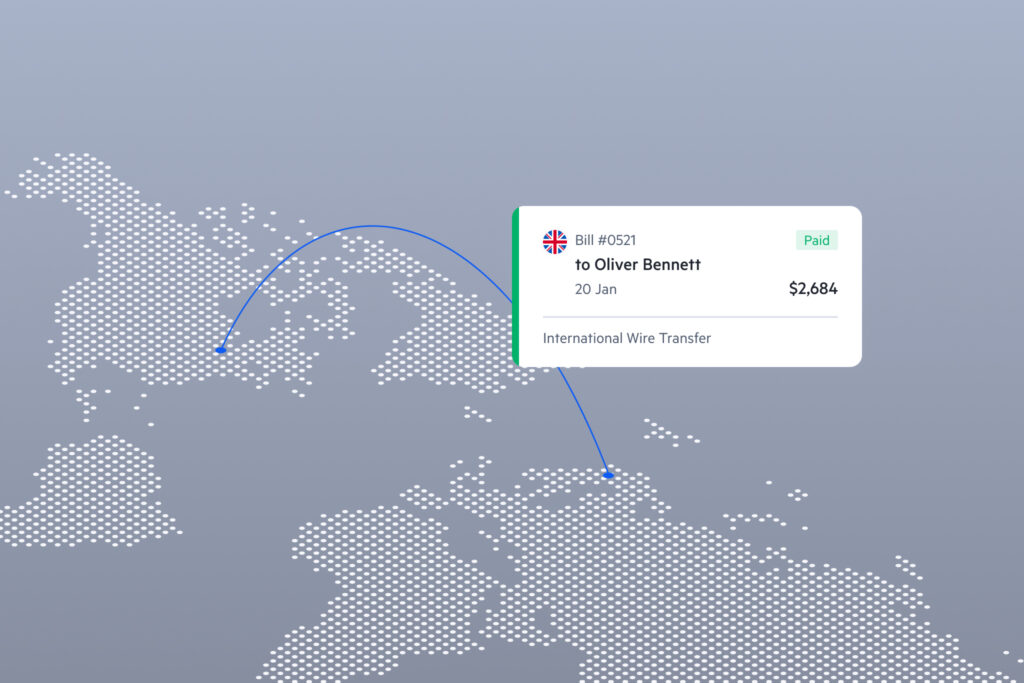
International wires allow businesses to transfer funds to and from bank accounts in other countries. They tend to take a bit longer than domestic wires, often one to five days, and come with higher fees. Outgoing international wire fees typically range from $25 to $50 per transfer, while incoming wire fees often fall between $15 to $25. Additional intermediary or currency conversion fees may apply, which can increase the total cost beyond the bank’s posted fee.
FX fees
Foreign exchange (FX) fees are markups that banks charge when converting one currency to another as part of an international transaction. They can apply anytime your bank is performing the currency conversion. For example, you’ll likely incur an FX fee when sending an international wire in a foreign currency or receiving a payment that must be converted into your account’s currency.
Expedited ACH fee
ACH transfers are electronic, batch-processed payments between U.S. banks that typically take one to three business days. Businesses often use them for recurring transactions, such as direct deposits, automatic bill payments, and payroll. While some banks charge small fees for standard ACH transfers (as noted in the transaction fees section), many offer standard ACH transfers at no cost. What’s become more common is for banks to offer expedited ACH deliveries for a fee. For example, with Lili, you can send a same-day ACH transfer for 1.50% of the transaction amount, with fees ranging from $0.50 to $20.
ATM fees
Most banks partner with an ATM network, such as Allpoint or MoneyPass, to provide customers with surcharge-free access to thousands of ATMs. If you use an ATM outside of a bank’s network, you’ll often be charged an out-of-network fee of a few dollars per transaction. Additionally, higher fees can apply if you use ATMs outside of your home country. It’s important to note that the ATMs themselves often charge fees that are separate from your bank’s fees.
Returned item fee
A returned item fee, also known as a non-sufficient funds (NSF) fee, can apply when a check or ACH transaction is rejected due to a shortage of funds in the account. When assessed, these fees typically range from $25 to $35 per returned item.
Overdraft fee
An overdraft fee is a per-transaction fee that some banks charge when they approve a transaction despite a shortage of funds in the account. The account holder is then required to pay back the covered amount plus the fee. The fees vary by institution but typically range from $10 to $35 per overdraft.
Stop payment fee
A stop payment fee is a fee banks may charge when customers request to stop a check or ACH payment that is in process. It often falls around $30 to $35 per request.
Foreign transaction fee
A foreign transaction fee is a fee some banks assess when you use your debit card with a foreign merchant. The fee is often equal to 1% to 3% of the purchase amount.
Card replacement fee
Banks may charge a card replacement fee if you need to replace the debit card linked to your account. In some cases, a standard replacement is free, but expedited or rush delivery will incur a fee.
Mail a check fee
Banks may offer a service where they print and mail checks on behalf of your business. This often comes with a fee of a few dollars to cover the materials, postage, and associated labor.
Protect your bottom line: How to minimize bank fees
To keep your banking fees to a minimum, start by analyzing how your business will use the account. Identify the services you’ll be using most, such as ACH transfers, domestic wire transfers, or mailing checks, and estimate the number of transactions you’ll perform per month.
Once you understand your needs, shop around. Build a shortlist of reputable banks that offer the services you need. From there, compare their fee schedules side by side. Run the numbers and estimate the monthly costs of each account. You’ll then be able to see which option will be most cost-effective.
Consider Lili for low-cost business banking
At Lili, we aim to help you run your business while keeping fees to a minimum. You won’t have to worry about a monthly service fee, 9 incoming domestic wire fees, overdraft fees, standard ACH fees, foreign transaction fees, or 6cash withdrawal fees at over 40,000 MoneyPass ATMs. Any fees we do charge are transparent and competitive in the market.
Learn more about business banking with Lili
Frequently asked questions about business banking fees
Find quick answers to FAQs about business banking fees.
Are there free business bank accounts?
When you hear the term “free business banking,” it typically refers to a business checking account that doesn’t have a monthly service fee. In other words, you won’t have to pay a monthly fee to keep the account open. However, “free” accounts do typically have other types of fees, such as wire transfer and expedited ACH fees.
Why do business bank accounts come with higher fees than personal bank accounts?
Business bank accounts typically come with higher fees because they’re built to handle more complexity. Businesses often process higher transaction volumes, send and receive wire transfers, run payroll, accept card payments, and manage multiple users or sub-accounts. They may also require additional services, such as business integrations, credit building, lending options, and higher levels of FDIC insurance.
Lili is a financial technology company, not a bank. Banking services are provided by Sunrise Banks, N.A., Member FDIC.
6 Up to $1,000 per cardholder per 24 hours period. Some locations have lower limits and retailer fees may vary ($4.95 max). Note that Lili does not charge transaction fees.
9 International wire transfers are only available to legal entity customers (LLCs, corporations, and partnerships). Transfers can be made to and from select countries. Please check your app for the most up to date list. Fees apply. Learn more here Sunrise Banks Account Agreement.
14 The Core banking account has no monthly fee. Monthly fees apply to the Pro, Smart, and Premium accounts. See the fee schedule here for details.