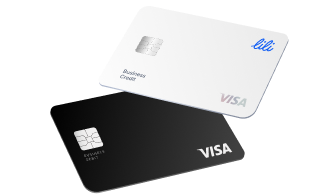
Yes. Business accounts are FDIC insured, as long as they’re held at an FDIC-member bank. The standard coverage is $250,000 per depositor, per insured bank, per ownership category. That applies to LLCs, corporations, partnerships, and unincorporated associations the same way it applies to personal accounts.
Coverage is automatic. You don’t apply, and you don’t pay for it. The moment you open a deposit account at an FDIC-insured institution, your money is protected up to the limit if that bank fails.
The catch most business owners miss: that $250,000 is a combined cap across all your deposit accounts at one bank, not a separate $250,000 per account. Below is exactly how it works, what’s covered, what isn’t, and how to protect balances above $250,000.
What FDIC Insurance Actually Covers for Business Accounts
FDIC insurance protects deposit products. For a business, that means:
- Business checking accounts
- Business savings accounts
- Money market deposit accounts
- Certificates of deposit (CDs)
- Cashier’s checks, money orders, and official bank items
If your bank fails, the FDIC either moves your deposits to a healthy bank or pays you directly, up to the coverage limit. Since the FDIC was created in 1933, no depositor has lost a single insured dollar.
How Much of Your Business Account Is FDIC Insured
The standard limit is $250,000 per depositor, per insured bank, per ownership category.
For a business, “per depositor” means the business entity itself. All deposits owned by a single corporation, partnership, or LLC at one bank are added together and insured up to $250,000, separately from the personal accounts of the owners.
This is where coverage limits are commonly misread.Opening multiple accounts at the same bank does not multiply your coverage:
- Checking with $100,000 + Savings with $200,000 = $300,000 total at one bank
- Insured: $250,000
- Uninsured: $50,000
The number of accounts, signers, or officers makes no difference. A single business entity cannot split funds across internal accounts at the same bank to stretch the limit.
Which Business Accounts Qualify
FDIC coverage extends to deposits held by:
- Corporations (including S-corps, C-corps, LLCs, and PCs)
- Partnerships
- Unincorporated associations, including nonprofits
Two conditions apply. The entity must be validly formed under state law, and it must be engaged in an “independent activity” – meaning it exists for a real business purpose, not solely to expand insurance coverage.
One important exception: sole proprietorships. A sole prop’s business deposits are not insured separately. They’re combined with the owner’s personal accounts held in their own name at that bank, and the $250,000 limit covers the total. If you run a sole proprietorship, your business and personal cash share one bucket.
What FDIC Insurance Does Not Cover
FDIC coverage applies to deposits only. It does not cover:
- Stocks, bonds, and mutual funds
- Annuities and life insurance policies
- Treasury securities
- Cryptocurrency
- Safe deposit box contents
This matters even if you bought those products through your bank. Investment products are never FDIC insured, regardless of where you purchased them.
How to Get More Than $250,000 in FDIC Coverage
If your business regularly holds more than $250,000 – common for anyone running payroll or managing operating capital – you have a few options.
- Use a sweep network. Some banks and fintech platforms automatically spread your deposits across multiple FDIC-insured banks behind one account. Each bank provides its own $250,000 of coverage, so your total protection multiplies without you opening or managing several accounts. This is the cleanest option for most growing businesses.
- Open accounts at multiple banks. Deposits at each separate FDIC-insured bank get their own $250,000 limit. The downside is operational overhead – more logins, more reconciliation, more accounts to track.
- Use separate legal entities. Deposits held by genuinely distinct legal entities (different LLCs or corporations engaged in separate activities) are insured separately. This only works if the entities are real and operate independently.
- Diversify ownership categories. Business and personal categories are insured separately, so a corporation’s $250,000 is distinct from the owners’ personal coverage at the same bank.
For most small and mid-sized businesses, the sweep-network route delivers the highest coverage with the least friction.
Are Fintech Business Accounts FDIC Insured?
The structure here is different from a traditional bank, so it’s worth being precise.
Many modern business banking platforms are fintech companies, not banks. They don’t hold an FDIC charter themselves. Instead, they partner with one or more FDIC-insured banks that actually hold your deposits. Your money sits at the partner bank, where it’s FDIC insured – not at the fintech.
The practical upside: because fintechs often route deposits through sweep networks of multiple partner banks, they can offer coverage far above the standard $250,000 – frequently up to $3 million – through a single account.
The thing to verify before signing up: confirm the platform names its FDIC-insured partner bank or banks, and that your deposits are held there. If a platform can’t tell you which member bank holds your money, that’s a red flag.
Here’s how leading sweep-enabled business accounts compare with a traditional single bank:
| Provider | Type | Max FDIC Coverage | How It Works |
|---|---|---|---|
| Lili | Fintech platform | Up to $3,000,000 | Deposits held at Sunrise Banks, N.A., Member FDIC, and swept across a network of FDIC-insured program banks. Coverage is automatic, requires no setup, and funds stay fully liquid. Built for small and mid-sized businesses managing real operating balances, with no monthly fee on the Core plan and no minimum balance. |
| Bluevine | Fintech platform | Up to $3,000,000 | Deposits held through Coastal Community Bank, Member FDIC, and sweep partner banks. |
| Traditional bank | Chartered bank | $250,000 per ownership category | Single institution; extra coverage requires opening accounts at additional banks. |
Common FDIC Mistakes Business Owners Make
- Assuming each account is separately insured. All deposits owned by one entity at one bank are combined under a single $250,000 limit.
- Treating a sole proprietorship like a corporation. Sole-prop business deposits are merged with the owner’s personal accounts, not insured separately.
- Forgetting investments aren’t deposits. Money market mutual funds, brokerage holdings, and CDs of securities are not FDIC insured.
- Not checking member status. Not every institution is FDIC insured. Use the FDIC’s BankFind Suite tool to confirm.
- Letting large balances sit uninsured. If you routinely hold over $250,000 at one bank, you have uninsured exposure unless you use a sweep network or spread funds out.
How Lili Helps
Lili is an advanced online business banking platform built for small and mid-sized businesses that handle real transaction volume – payroll, vendors, client payments, and growing balances, and at that stage, the $250,000 ceiling becomes a real constraint.
Deposits in a Lili account are held at Sunrise Banks, N.A., Member FDIC, and distributed across a sweep network of FDIC-insured partner banks. That structure provides FDIC insurance coverage up to $3 million, well above the standard $250,000, with no extra accounts to open and no action required from you. Funds stay fully liquid the whole time.
Because Lili is a financial technology company rather than a bank, your money is held at insured partner banks – so your deposits remain protected through those institutions regardless of Lili’s operating status.
On top of the coverage, business savings balances can earn up to 4.00% APY, and the Core account carries no monthly fee and no minimum balance. That combination of high coverage, high yield, and low cost is what a business outgrowing the $250,000 ceiling actually needs.
FAQ
Are business accounts FDIC insured?
Yes. Business deposit accounts at FDIC-member banks are insured up to $250,000 per depositor, per bank, per ownership category. Coverage is automatic and free.
How much FDIC insurance does a business account get?
The standard limit is $250,000. All deposit accounts owned by the same business entity at one bank are combined under that single limit, separate from the owners’ personal accounts.
Can a business get more than $250,000 in FDIC coverage?
Yes. Sweep networks spread deposits across multiple insured banks for coverage up to $3 million through one account. You can also use multiple banks or separate legal entities.
Are fintech business accounts FDIC insured?
Yes, when the fintech partners with FDIC-insured banks that hold your deposits. The money is insured at the partner bank, not at the fintech itself. Always confirm which member bank holds your funds.
Is a sole proprietorship’s business account FDIC insured?
Yes, but it’s not insured separately from the owner. Sole-prop business deposits are combined with the owner’s personal accounts at the same bank under one $250,000 limit.
What business accounts are not covered by FDIC insurance?
Investments such as stocks, bonds, mutual funds, annuities, Treasury securities, and cryptocurrency are never FDIC insured, even if bought through a bank.
How do I know if my bank is FDIC insured?
Use the FDIC’s BankFind Suite tool, or look for the “Member FDIC” designation. Coverage only applies at insured institutions.